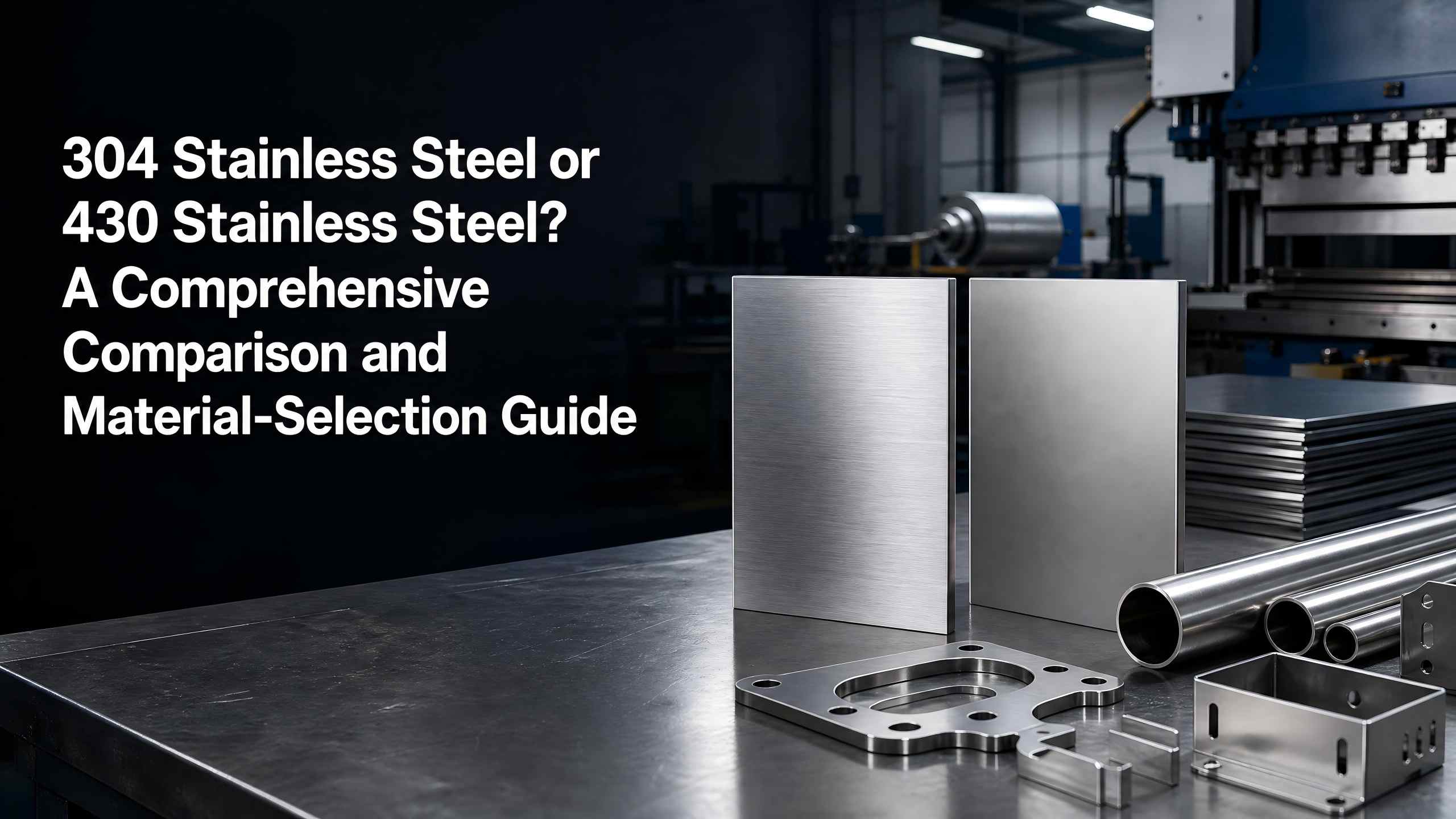
When purchasing kitchenware, home appliances, decorative building materials and industrial components, many people face a dilemma: which is better, more durable and more cost‑effective between 304 stainless steel and 430 stainless steel? Both are the most widely‑used stainless‑steel grades on the market. They feature highly similar polished appearances, so ordinary users can hardly tell them apart with the naked eye. Nevertheless, they differ greatly in chemical composition, mechanical properties, corrosion resistance, ductility, heat resistance, price‑cost and applicable scenarios. Drawing on years of material‑selection and industry practical experience at NatureSteel this article presents easy‑to‑understand explanations paired with professional parameter comparisons to help you quickly distinguish between 304 and 430 stainless steel, make accurate material selections and avoid pitfalls.
To grasp the gaps between the two grades, you first need to understand their basic attributes, chemical compositions and core characteristics, which constitute the root of all performance differences.
304 (SUS304) is a versatile austenitic food‑grade stainless steel with standard composition: 18%‑20% chromium, 8%‑10.5% nickel, ≤0.08% carbon, plus trace elements such as manganese and silicon. It is also known as 18‑8 stainless steel.
Depending on application purposes, common variants of 304 are available: low‑carbon grade 304L delivers stronger intergranular‑corrosion resistance; high‑carbon grade 304H offers higher strength at high temperatures. Standard 304 suffices for routine household and commercial applications.
Thanks to its high‑chromium and high‑nickel formulation, 304 stainless steel boasts outstanding rust resistance, corrosion resistance, oxidation resistance and high‑temperature resistance, alongside excellent ductility and toughness. It can withstand humid, weakly acidic and mild salt‑fog environments. Its smooth surface resists soiling, comes with inherent antibacterial properties and maintains chemical stability.
It is mainly used in scenarios requiring high safety, rust resistance and durability: high‑end kitchenware, food‑processing equipment, medical devices, chemical storage tanks, outdoor building materials, bathroom hardware, etc.
430 is an economical ferritic stainless steel with core composition: 16%‑18% chromium, ≤0.08% carbon and nickel content below 0.5%. Its near‑absence of costly nickel marks its biggest difference from 304, which directly gives rise to performance gaps.
430 features high hardness and good cost‑performance plus decent basic heat resistance. Yet its extremely low nickel content results in poor toughness, ductility and corrosion resistance. It is prone to rusting, oxidation and yellowing in humid, acidic‑alkaline or salt‑fog environments.
It is mostly deployed in dry indoor environments, for general household articles, home‑appliance casings, interior decorations and non‑core automotive parts. It is unsuitable for long‑term contact with food ingredients, salt water, strong acids or seawater.
This section conducts an all‑round comparison of real‑world gaps between the two stainless‑steel grades from four core dimensions: chemical composition, corrosion resistance, mechanical durability and practical applications, incorporating precise professional data to fully answer the core question “which performs better”.
Chemical composition constitutes the root cause for performance discrepancies between the two grades. The most prominent gap lies in nickel content: nickel greatly improves the ductility, toughness and acid‑alkali corrosion resistance of stainless steel.
304 stainless steel: 18%‑20% chromium, 8%‑10.5% nickel, ≤0.08% carbon, plus trace elements including manganese, silicon, phosphorus and sulfur, with a well‑balanced and stable alloy formulation.
430 stainless steel: 16%‑18% chromium, ≤0.5% nickel, ≤0.08% carbon. Its extremely low nickel content directly leads to inferior flexibility, mechanical properties and corrosion resistance.
304 stainless steel takes a comprehensive lead. Benefiting from its dual‑protection structure of high chromium and high nickel, 304 delivers exceptional corrosion resistance. It remains stable in humid environments, weakly‑acidic media and ordinary seawater salt‑fog conditions, retaining a bright rust‑free surface over long‑term service with superior oxidation and rust resistance.
430 stainless steel relies solely on a single chromium layer for rust prevention with no nickel‑element reinforcement, resulting in weak protective performance. It is highly susceptible to oxidation, rust spots and corrosion under harsh operating conditions such as humidity, salt spray, acid‑alkali exposure or seawater, and is only fit for dry, non‑corrosive mild indoor environments.
Both 304 and 430 stainless steel possess good durability compared with ordinary carbon steel, yet 304 exhibits far superior overall mechanical performance. Specific parameter differences between the two grades are as follows:
Performance parameters of 304 stainless steel: tensile strength 520‑750 MPa, yield strength 200‑230 MPa, elongation ≥45%, hardness 70‑90 HRB. Its high elongation and toughness grant 304 excellent ductility, supporting complex processing such as bending, stretching and welding without easy cracking or deformation.
Performance parameters of 430 stainless steel: tensile strength approx. 483 MPa, yield strength approx. 310 MPa, elongation merely 22%, hardness approx. 85 HRB. 430 boasts slightly higher hardness than 304 but low elongation and poor toughness. Its ferritic structure also renders it brittle at low temperatures, affording low processing tolerance and frequent cracking risks.
Magnet testing serves as the simplest zero‑cost practical method to distinguish 304 from 430 stainless steel with high accuracy:
‑ 304 stainless steel: generally non‑magnetic. Only bent processed areas develop faint temporary magnetism, which can be neglected; ordinary magnets cannot adhere to it.
‑ 430 stainless steel: inherently and strongly magnetic; magnets attach firmly to it, constituting its most intuitive distinguishing feature.
304 stainless steel features stronger heat resistance and thermal stability. It resists deformation and oxidative yellowing under high‑temperature conditions and releases no harmful substances, suiting long‑term high‑temperature service scenarios. Its 304H variant is specially engineered for high‑temperature industrial operating conditions.
430 stainless steel delivers acceptable basic heat resistance, yet it tends to undergo oxidative discoloration and material aging under sustained high‑temperature exposure with poor stability. It is not suitable for frequent high‑temperature or heavy‑duty applications.
430 stainless steel presents notable price advantages. Free of expensive nickel, its raw‑material cost is 20%‑30% lower than that of 304, bringing remarkable cost‑performance for bulk procurement. It is the mainstream material for affordable home appliances and interior decorations.
304 stainless steel commands higher upfront procurement costs. Nevertheless, it features stable performance, doubled service life and minimal maintenance requirements, delivering higher comprehensive cost‑performance over its service cycle.
Qualified standard‑grade 304 stainless steel is an internationally‑recognized food‑safe material. Non‑toxic and harmless, it resists corrosion by food‑derived acids and alkalis with no heavy‑metal leaching. It permits long‑term direct contact with drinking water, fruits, vegetables and hot‑cold food ingredients, suiting food‑processing and household catering scenarios.
430 stainless steel is not a standard food‑grade material. Short‑term minor food contact poses no safety hazard. However, prolonged exposure to salt water, vinegar, fruit juice and other acid‑alkali food ingredients may trigger rusting and impurity leaching. It is not recommended as material for cookware or tableware that comes into direct contact with food.
| Comparison Dimension | 304 Stainless Steel | 430 Stainless Steel |
|---|---|---|
| Chemical Composition | 18‑20% chromium, 8‑10.5% nickel, ≤0.08% carbon | 16‑18% chromium, ≤0.5% nickel, ≤0.08% carbon |
| Corrosion Resistance | Extremely high; withstands weak acids, humidity and seawater salt‑fog; highly rust‑resistant | Low; prone to oxidation, rusting and corrosion under harsh conditions |
| Mechanical Durability | Excellent ductility and toughness; easy to bend, weld and deep‑process; crack‑resistant | Slightly higher hardness yet low elongation and poor toughness; brittle at low temperatures; susceptible to processing‑induced cracking |
| Applicable Scenarios | High‑end kitchenware, medical equipment, food‑processing facilities, chemical equipment, high‑end construction, coastal outdoor engineering | General household articles, interior decorative fittings, home‑appliance panels, non‑critical automotive components |
| Price & Cost | Relatively high (high nickel content raises raw‑material costs) | Low (nickel‑free formulation for high cost‑performance) |
Advantages: Strong corrosion resistance, anti‑oxidation and rust‑proof performance, high crack‑resistant toughness, good ductility, easy welding and processing, stable high‑temperature performance, food‑grade safety, antibacterial and easy‑to‑clean properties, broad application scope, long service life; compatible with demanding working conditions including seawater, weak acids and high humidity.
Disadvantages: High procurement cost, relatively low material hardness, minor surface‑scratch susceptibility.
Advantages: Affordable price with high cost‑performance, high hardness, scratch‑and‑abrasion resistance, decent basic heat resistance, high surface finish, excellent thermal conductivity.
Disadvantages: Poor corrosion resistance, susceptible to rust and oxidation, low ductility, insufficient toughness, low‑temperature brittleness, poor resistance to acids, alkalis and salt spray, non‑standard food‑grade material, relatively short service life.
Given the prominent performance gaps, the two grades complement each other in application scenarios. Proper material selection helps you avoid waste and practical pitfalls.
✅ Prioritize 304 stainless steel for these scenarios
Applications requiring high corrosion resistance, safety and durability: high‑end household cookware, pots and pans, sinks, faucets, tableware, vacuum flasks; medical devices, food‑processing systems, food‑storage tanks; high‑end building railings, stainless‑steel handrails, partitions; chemical storage tanks, pipelines, wastewater‑treatment equipment; building materials and hardware for outdoor and coastal humid environments.
✅ Prioritize 430 stainless steel for these scenarios
Low‑corrosion‑risk applications with limited budgets, focusing on decoration and basic wear resistance: general household cookware, gas‑stove fittings, economical shower heads; indoor door frames, decorative panels, low‑cost cabinetry, refrigerator back panels, home‑appliance casings; automotive trim strips, screws, non‑critical wheel‑assembly components and other dry‑environment fittings.
With a well‑balanced formulation, outstanding mechanical properties and strong corrosion resistance, 304 stainless steel delivers far superior overall performance versus 430. Thanks to its remarkable stability, safety and durability, it serves as the optimal high‑quality material choice for food‑related, medical, outdoor, chemical and high‑end‑construction applications.
Boasting moderate hardness and outstanding cost‑performance, 430 stainless steel fully meets demands of general household articles, interior decorations and non‑core automotive parts. It represents the economical preferred option for dry non‑corrosive‑environment applications.
As a professional stainless‑steel supplier, NatureSteel consistently advocates application‑oriented material selection and quality priority. We deliver well‑matched, high‑quality stainless‑steel material solutions for diverse household, commercial and industrial scenarios. Customers from all sectors are welcome to consult, negotiate cooperation and arrange long‑term procurement
Address:No. 696, Binhai 12th RoadBinhai Industrial Park, Wenzhou Economic & Technological Development ZoneWenzhou, Zhejiang Province, P.R.China
Copyright © 2026 Nature Steel Group Co., Ltd. All rights reserved. Links| Sitemap| RSS| XML| Privacy Policy