News

How to Solve Fracture Problems Caused by Fatigue of 304 Stainless Steel Round Bars

2026-10-08 0 Leave me a message

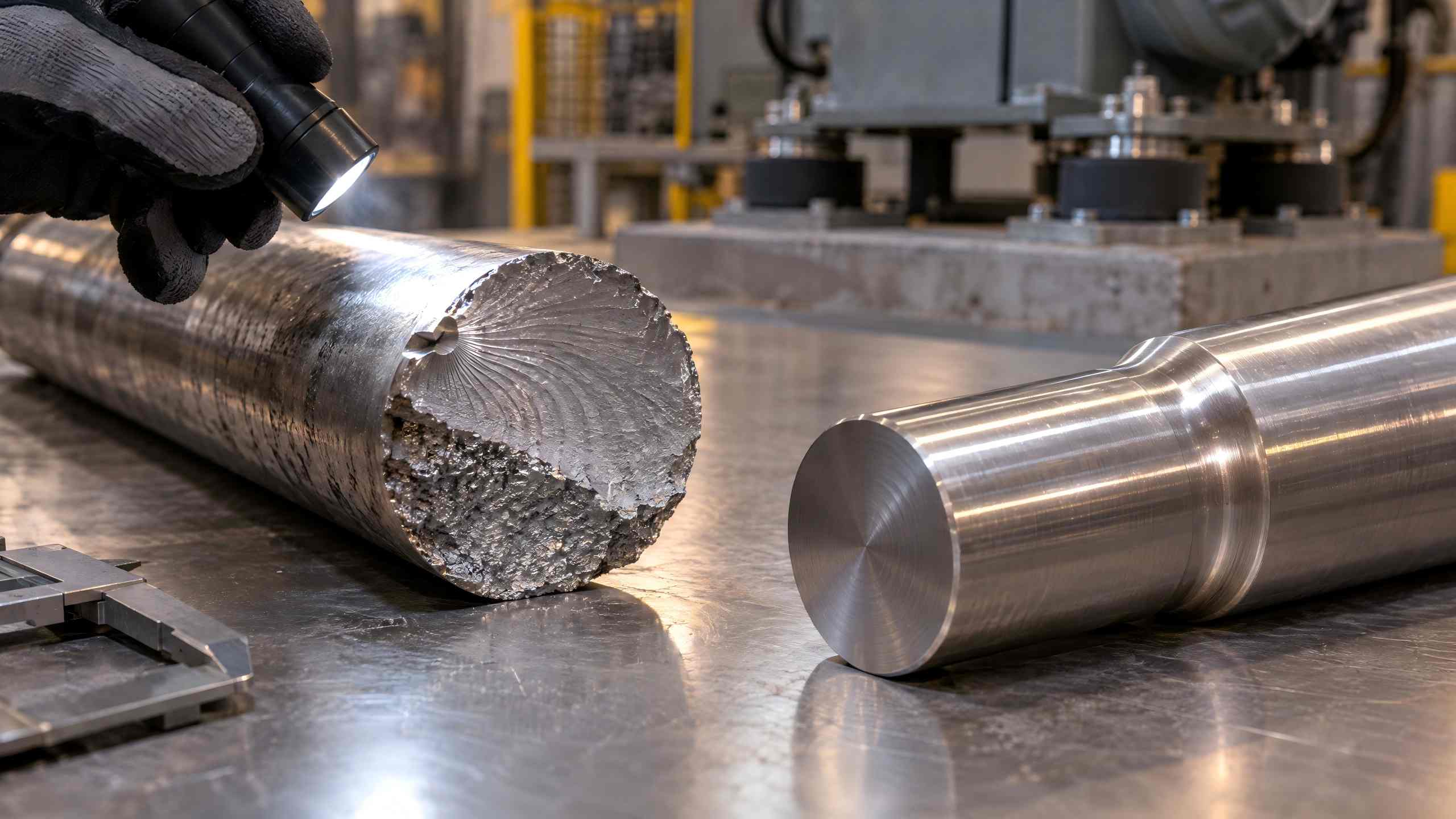
Why do 304 stainless steel round bars fracture unexpectedly after long‑term service? In most cases, it is not due to insufficient material strength, but fatigue damage triggered by long‑term cyclic stress. Fatigue failure is concealed, develops slowly and occurs abruptly, posing major hidden risks to equipment operation and maintenance. Based on numerous field cases, NatureSteel summarizes the core causes and optimization solutions for fatigue fracture of 304 round bars, helping enterprises completely avoid such failures.


I. Principles and Core Influencing Factors of Fatigue Fracture for 304 Stainless Steel Round Bars


When round bars are subjected to alternating loads such as repeated tension‑compression and vibration for a long time, micro‑cracks will generate in local high‑stress zones. As equipment keeps running, cracks expand continuously and eventually lead to overall fracture. Among them, stress amplitude, mean stress and number of stress cycles are the three core factors directly determining the fatigue life of round bars. Larger stress fluctuation, higher mean load and more stress cycles correspond to higher fracture risks.


II. Main Causes of Fatigue Fracture for 304 Stainless Steel Round Bars


1. Sub‑standard raw material quality


With the development of infrastructure construction and manufacturing industries, market demand for 304 stainless steel round bars keeps growing. Nevertheless, loopholes exist in industry supervision, allowing some non‑standard inferior materials to enter the market. Such round bars feature unstable chemical composition, coarse grains, and internal defects including slag inclusions and pores, which greatly degrade fatigue resistance and act as critical hidden sources of fracture during long‑term equipment operation.


2. Local stress concentration


Stress concentration readily occurs at positions such as abrupt diameter changes, sharp step corners, thread roots and machining scratches on round bars. Under alternating loads, micro‑cracks first initiate at these positions and spread progressively to cause fracture, serving as the primary inducement for fatigue failure.


3. Surface defects and corrosion fatigue


Rough machined surfaces, oxide scales and dents from collision damage the surface layer of round bars. Under humid or chloride‑containing working conditions, pitting pits form on round bars and act as natural crack sources. The combination of corrosion and alternating loads gives rise to corrosion fatigue, accelerating crack propagation and shortening service life of equipment.


4. Improper design and assembly


Abrupt section changes, absence of fillet transitions, misalignment during assembly and excessive interference fit expose round bars to additional bending stress, which continuously aggravates material fatigue damage.

Fatigue Fracture Steel Bar

III. Practical Solutions for Fatigue Fracture of 304 Stainless Steel Round Bars


1. Strictly control raw material quality


Select formal national‑standard products during procurement and request material test reports to verify mechanical properties and chemical composition. Cold‑drawn 304 round bars are preferred for working conditions with high cyclic loads. Conduct flaw detection to eliminate internal defects so as to fundamentally avoid fatigue fracture caused by material problems.


2. Optimize structures to eliminate stress concentration


Adopt smooth fillet designs for round bar steps and diameter transition sections and remove sharp‑corner structures. Rolled threads are preferred to retain the integrity of metallic fibers, avoiding structural defects caused by cutting threads and improving overall fatigue resistance.


3. Strengthen surface protection treatment


Polish high‑stress zones to remove scratches and oxide layers. Shot peening shall be adopted to form residual compressive stress on the surface layer so as to restrain micro‑crack initiation. Take protective measures during transportation and installation, and implement anti‑corrosion treatment under severe working conditions to prevent corrosion‑fatigue damage.


4. Standardize assembly and equipment working conditions


Ensure coaxiality during installation and reasonably control fitting accuracy and pre‑tightening force to reduce additional stress. Install damping structures for high‑frequency vibration equipment to lower stress fluctuation, and perform regular inspection to identify potential micro‑cracks.


IV. Conclusion


In general, proper avoidance of stress concentration, adequate surface protection and selection of qualified high‑quality profiles can effectively resolve fatigue fracture issues of 304 stainless steel round bars. Focusing on the production of high‑quality stainless steel profiles, NatureSteel improves the fatigue resistance of round bars fundamentally with stable material performance and sophisticated processing techniques, and guarantees long‑term safe operation of equipment.


Related News
Leave me a message
X
We use cookies to offer you a better browsing experience, analyze site traffic and personalize content. By using this site, you agree to our use of cookies. Privacy Policy
RejectAccept