News

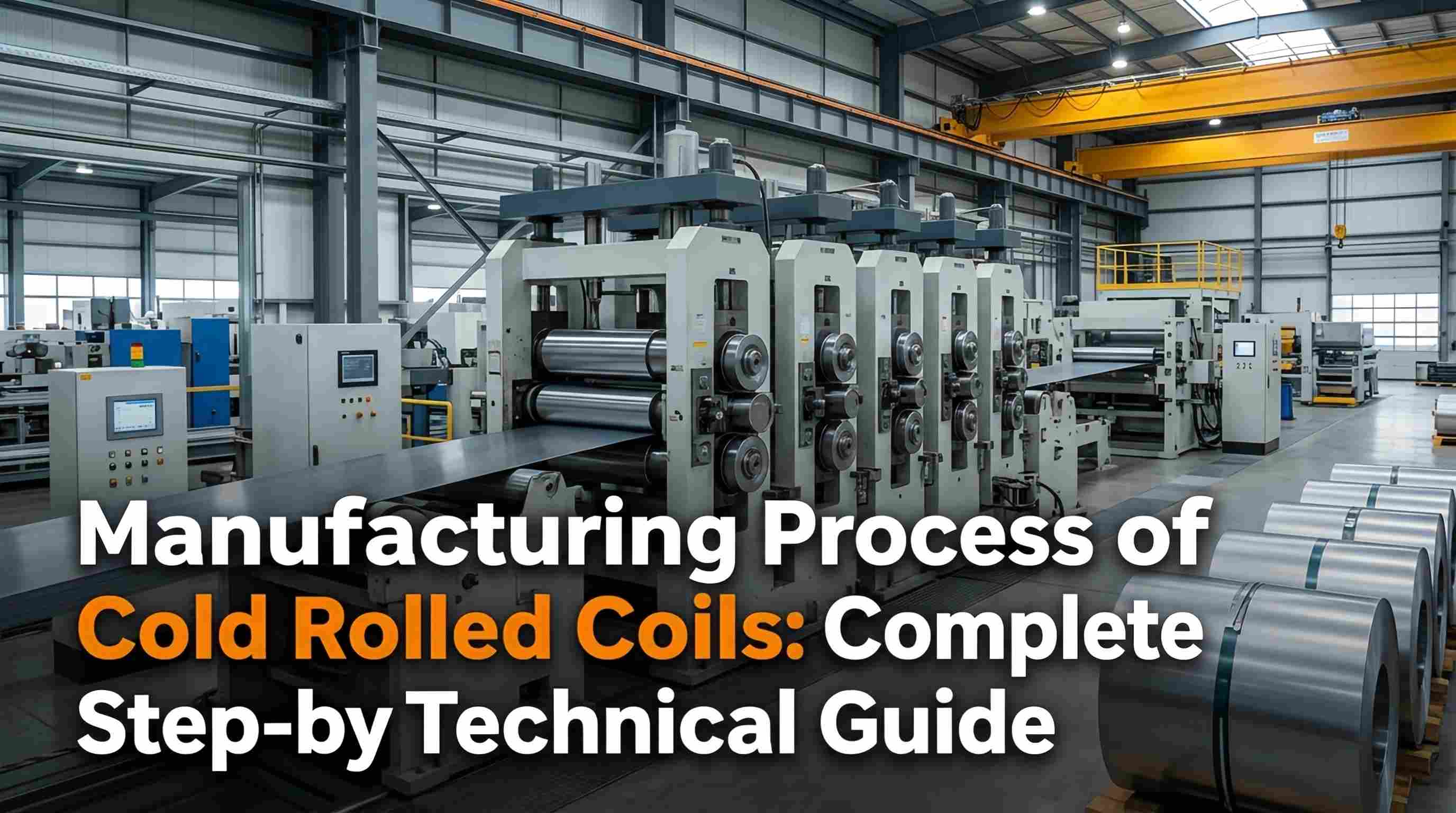
Manufacturing Process of Cold Rolled Coils: Complete Step-by-Step Technical Guide

2026-07-16 0 Leave me a message

Cold rolled coil (CRC) is a high-precision steel material widely used in the industrial sector, serving core industries including manufacturing, construction, automobile production and home appliance manufacturing. As a professional steel supplier with years of experience in cold rolled steel production and supply, Nature Steel fully understands the key concerns of industry practitioners and procurement personnel: how exactly are cold rolled coils manufactured?

Many people tend to confuse cold rolled coils with hot rolled steel. The two differ significantly in production processes, product properties and applicable scenarios. Cold rolled coils are fabricated through elaborate multi-stage procedures, featuring superior surface finish, precise dimensional tolerances and stable mechanical strength, making them suitable for high-precision and high-surface-quality processing applications. This article breaks down the full production workflow of cold rolled coils step by step to clarify their production principles and industrial value.

Cold Rolled Coil Factory

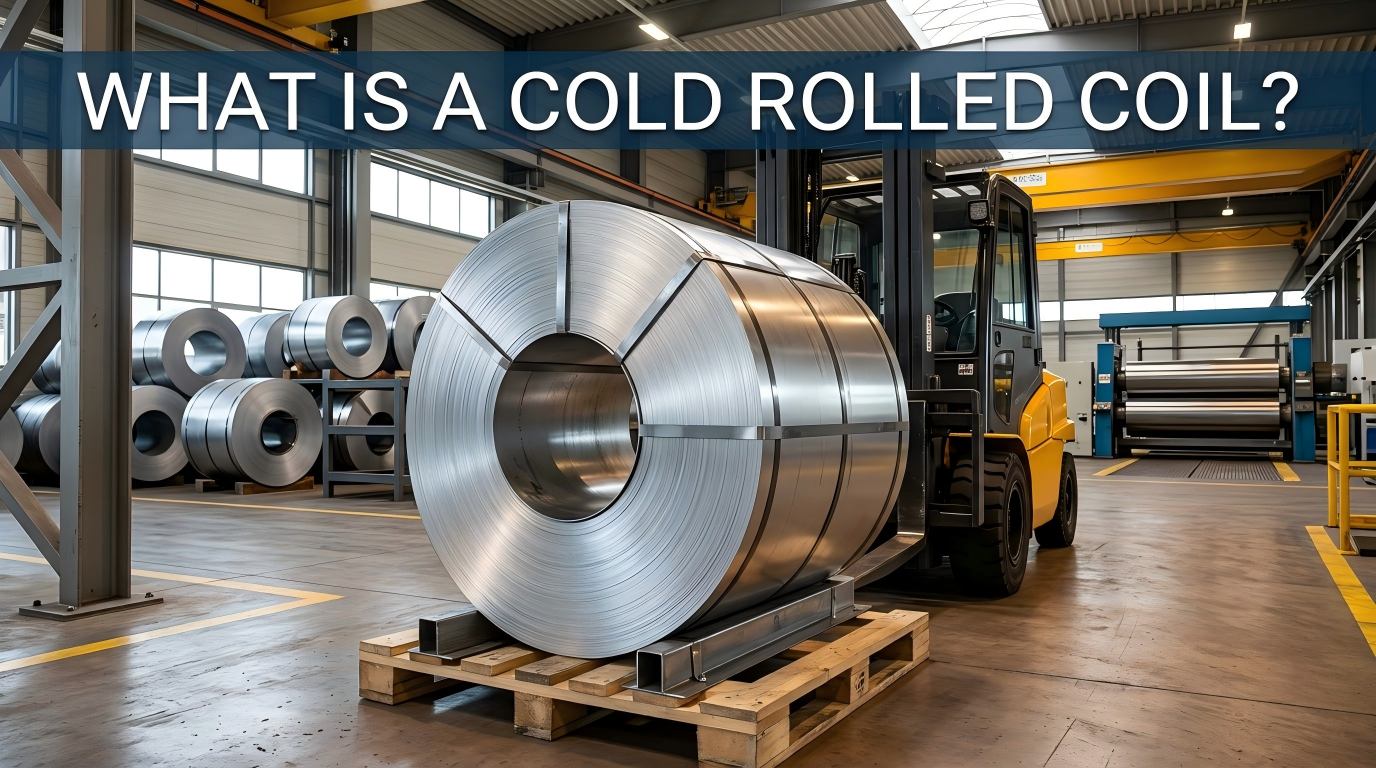
1. What Is a Cold Rolled Coil?

Simply put, a cold rolled coil (CRC) uses hot rolled steel as the base material and undergoes secondary rolling at room temperature, below the steel’s recrystallization temperature, to form refined steel products. Compared with hot rolled steel formed under high temperatures, the cold rolling process fundamentally improves the comprehensive quality of steel with three major core advantages: smooth and refined surface treatment, precise dimensional accuracy down to millimeter scale, and robust and excellent mechanical strength. This is the primary reason why cold rolled coils are the preferred material for high-end industrial processing.

2. Complete Manufacturing Process of Cold Rolled Coils

The production of cold rolled coils follows a standardized, refined multi-step industrial workflow. Every procedure from raw hot rolled material preparation to finished product packaging and delivery directly determines the quality of the final product. The specific procedures are as follows:

2.1 Raw Material Preparation of Hot Rolled Coils

The exclusive base material for producing cold rolled coils is hot rolled coil (HRC). Factories first heat steel slabs to temperatures above 1000°C and roll them into uniform thick hot rolled coils via hot rolling equipment. Such hot rolled coil raw materials feature a wide thickness range and stable basic strength, yet they carry heavy oxide scales on the surface and low dimensional precision. They can only be used as rough processing raw materials and cannot be directly applied in fine manufacturing, requiring subsequent pre-treatment procedures for cold rolling. Before production, hot rolled coils with qualified appearance, thickness and flatness are strictly screened to stabilize finished product quality from the source.

2.2 Pickling Pre-Treatment for Impurity Removal

Pickling, also referred to as descaling, is an indispensable core pre-treatment procedure in cold rolling production. Oxide scales and rust impurities attached to the surface of hot rolled coils will not only mar the forming effect of subsequent cold rolling and cause surface defects on finished products, but also abrade precision rolling equipment and undermine production accuracy.

In production, a dedicated pickling line uses acid solutions to treat steel surfaces and completely strip oxide layers and rust impurities. The steel then undergoes multiple rounds of clean water rinsing and drying to obtain impurity-free clean steel surfaces, laying a solid foundation for subsequent precision cold rolling operations. This procedure is a critical prerequisite for manufacturing high-quality cold rolled coils.

2.3 Precision Cold Rolling at Ambient Temperature (Core Procedure)

Cold forming constitutes the core link of the entire CRC production process, carried out entirely at room temperature without high-temperature heating. Clean steel coils after pre-treatment are fed into professional cold rolling mills, where high-precision rollers continuously squeeze and roll the steel to gradually reduce its thickness. The maximum thickness reduction ratio can reach 90%, enabling customized thin steel specifications ranging from 0.3mm to 3.0mm.

During ambient-temperature rolling, strain hardening (work hardening) occurs in the steel. This not only delivers more accurate steel thickness dimensions and uniform smooth surface texture, but also markedly boosts the overall hardness and structural strength of the steel. However, it simultaneously reduces the steel’s toughness and ductility, rendering it brittle and unfit for direct bending and stamping processing. Subsequent procedures are required to optimize its properties.

2.4 Degreasing and Cleaning Treatment

A large volume of rolling oil is applied during cold rolling to reduce equipment abrasion and provide cooling lubrication, leaving oil residues on steel surfaces. If sent directly to heat treatment, residual oil will trigger steel oxidation, surface color difference, stain defects and other quality issues. Hence, the production line adopts multiple processes including alkaline degreasing and electrolytic cleaning to thoroughly eliminate oil stains and impurities on steel surfaces, ensuring pristine steel substrates.

2.5 Annealing for Property Modification

Annealing is the key procedure to optimize steel mechanical properties, addressing the brittleness and poor ductility of steel after cold rolling. Cold rolled steel coils are conveyed into annealing furnaces for constant-temperature heating. Precise temperature control enables recrystallization of the internal grain structure of steel and fully releases residual internal stress.

Steel treated by annealing completely eliminates brittleness, restores good flexibility, formability and stamping ductility, fully adapting to various bending, stamping and deep processing scenarios. Mass commercial production mostly adopts continuous annealing lines for high efficiency and uniform product performance, while batch and special customized products utilize batch annealing processes.

2.6 Skin Pass Rolling and Finishing Processing

After annealing, steel undergoes light skin pass rolling (temper rolling). Fine rolling with small reduction rates corrects minor flatness deviations of steel, eliminates yield point elongation of steel, and further optimizes surface finish and overall flatness, bringing steel hardness and toughness up to industrial usage standards.

Subsequent supporting finishing procedures include precise slitting, edge trimming, flatness inspection and more. Steel coil width can be adjusted and edge defects trimmed according to customer specification requirements to accommodate processing applications across various industries.

2.7 Quality Inspection, Coiling and Finished Product Packaging

Steel coils after finishing are recoiled into standard coils before entering comprehensive quality inspection. Inspectors rigorously test core indicators including steel thickness tolerance, surface finish, mechanical properties and flatness, fully screening for surface defects and performance problems. Cold rolled coils passing quality inspection are professionally protected with waterproof paper and steel band reinforcement to avoid oxidation, collision and deformation damage during transportation and storage, completing final finished product delivery for direct use in production across various industries.

Summary

The manufacturing of cold rolled coils forms a precise and complete industrial system, with the core workflow as follows: hot rolled coil preparation → pickling for impurity removal → precision cold rolling at ambient temperature → degreasing and cleaning → annealing for property modification → skin pass rolling and finishing → quality inspection and packaging. Unlike hot rolled steel manufactured via high-temperature forming, cold rolling integrates ambient-temperature precision processing and multiple property optimization procedures to achieve comprehensive upgrades in dimensional accuracy, surface quality and mechanical performance. Featuring high precision, refined surface and superior strength, cold rolled coils from Nature Steel serve as irreplaceable core steel supply partners for modern high-end manufacturing industries.


Related News
Leave me a message
X
We use cookies to offer you a better browsing experience, analyze site traffic and personalize content. By using this site, you agree to our use of cookies.Privacy Policy
RejectAccept